
The MAP 2.0 assessment is designed to measure student growth rather than just achievement at a single point in time. Instead of evaluating only what a student knows today, the test analyzes how skills develop as they continue learning. As schools nationwide rely more heavily on adaptive assessments, parents and students often search for MAP 2.0 Post Assessment Answers as a shortcut to success. However, high scores aren’t achieved by memorizing answers—they come from understanding skill expectations, interpreting results, and creating a solid plan to improve performance. This guide breaks down how MAP works, how to read the score report, and the most effective strategies to build long-term academic growth.
1. Understanding How MAP 2.0 Works and Why Scores Matter
MAP 2.0 (Measures of Academic Progress) uses adaptive testing, meaning every student receives a personalized question pathway. When the student answers questions correctly, the test becomes harder. If they struggle, the system adjusts and provides simpler content. The goal is to pinpoint each student’s instructional level rather than rank them against peers. This process explains why two students in the same class can receive different question sets and different difficulty levels.
Unlike traditional standardized tests that provide letter grades or percentage scores, MAP uses the RIT scale. RIT stands for Rasch Unit—a numeric score that represents skill mastery over time. Teachers use RIT growth trends to decide classroom groups, identify academic gaps, and recommend enrichment. Students are not competing; they are building skills step by step. This understanding is critical because searching for “answers” doesn’t help when every student’s experience is different.
2. Why Googling MAP 2.0 Post Assessment Answers Won’t Improve Your Score
Many students search for exact MAP 2.0 Post Assessment Answers online, hoping to find a set of cheat sheets or leaked test codes. What they quickly discover is that there are no universal answers. Due to adaptive design, the content is randomly generated, varied in difficulty, and aligned directly with each student’s personal progress. Cheating isn’t only unethical—it simply won’t work. Even if one question appears familiar, the adaptive system instantly recalibrates. Students who guess or try to “game” the exam usually receive lower RIT scores.
Instead of looking for shortcuts, the smarter approach is to focus on the skills each subject measures. For reading, students should master comprehension, vocabulary, and inference. For math, concepts range from number sense to geometry depending on grade level. For language, grammar and writing structure take priority. With this mindset, learners build real capability that carries into future exams, classwork, and real-life academic tasks.
3. Breaking Down MAP 2.0 Subject Areas
The MAP 2.0 assessment typically covers Reading, Mathematics, and sometimes Language. Each subject focuses on a blend of fundamentals and application.
Reading MAP evaluates comprehension, main idea identification, supporting evidence, vocabulary context clues, and informational text interpretation. Students who struggle with inference or summarization often see stagnation in RIT growth.
Math MAP tracks primary number operations in early grades, then expands into fractions, decimals, algebraic reasoning, geometry, and problem solving by middle school. Students must do more than memorize procedures—they must understand why certain math strategies work.
Language MAP emphasizes grammar, sentence structure, punctuation, and editing tasks. These skills directly influence writing fluency and academic confidence. Improving in one subject often boosts performance in others, especially when reading comprehension influences math word problems.
Understanding how each subject scores improvement helps learners form targeted study habits instead of trying to memorize a nonexistent answer sheet.
4. How to Interpret Your MAP Score Report Like a Teacher
One of the benefits of MAP testing is how transparent the results can be when interpreted correctly. After a student completes the post-assessment, the score report shows three critical components: the RIT score, projected growth, and percentile rank. The RIT score measures current skill level. Percentile rank compares performance to students nationwide. Projected growth shows how much improvement is expected based on age and grade.
Parents often focus too heavily on percentile ranking, assuming a low number means failure. In reality, growth is more important than position. A student who begins reading at a below-average RIT score but improves significantly over multiple terms is making strong progress—even if they remain below the national median. The MAP program was built to track skill development over time. Students who learn to analyze their reports become active, confident participants in their own academic journey.
5. What “Learning Growth” Means in MAP 2.0
Unlike typical summative assessments, MAP post-assessments measure growth. If a student’s RIT increases between tests, the program identifies improvement in content mastery. Teachers use this data to make critical instructional decisions: differentiating assignments, adjusting groups, or recommending additional practice. A student who sees their RIT rise can feel motivated even if the percentile rank stays the same.
Growth can also be non-linear. Students may experience plateaus, especially when moving into a new concept cluster like algebra or informational text analysis. This is normal. MAP is not a test of acceleration; it is a snapshot of learning readiness. When students internalize this idea, they’re more willing to challenge themselves rather than compare their performance to someone else’s.
6. Healthy Preparation Strategies Before Your Post Assessment
To perform well, students need calm preparation, not cramming. MAP 2.0 doesn’t reward memorization; it rewards consistent academic skills. A strong study schedule might include 20–30 minutes of reading each day, solving math problems related to classroom topics, and reviewing vocabulary words from recent lessons. What matters most is building a relationship with the subject.
Because MAP uses adaptive logic, students must learn how to think through problems. For math, this might mean sketching diagrams, checking calculations, or breaking down multi-step questions. For reading, students should slow down, reread key paragraphs, and underline main ideas. This style mimics the habits of high-performing learners everywhere, not just test takers.
7. Skill-Building Techniques That Directly Influence MAP Scores
Improving your MAP score is like strengthening a muscle—it takes repetition and intention. For reading, daily exposure to both fiction and nonfiction boosts comprehension. Most students gravitate toward stories but struggle with informational articles. Practice both. Highlight claims and evidence. Ask “Why did the author include this?”
In mathematics, students should practice applying formulas in varied situations. If they memorize only steps, they quickly lose confidence when a word problem appears different from homework. Use resources such as Khan Academy, IXL, or teacher-created worksheets. Each lesson builds core competencies that MAP recognizes.
For language skills, writing short journal entries or proofreading sample paragraphs sharpens grammar instincts. Students who edit their own writing typically improve faster because they see pattern errors and learn to self-correct.
8. Using Your Classroom as a Training Ground
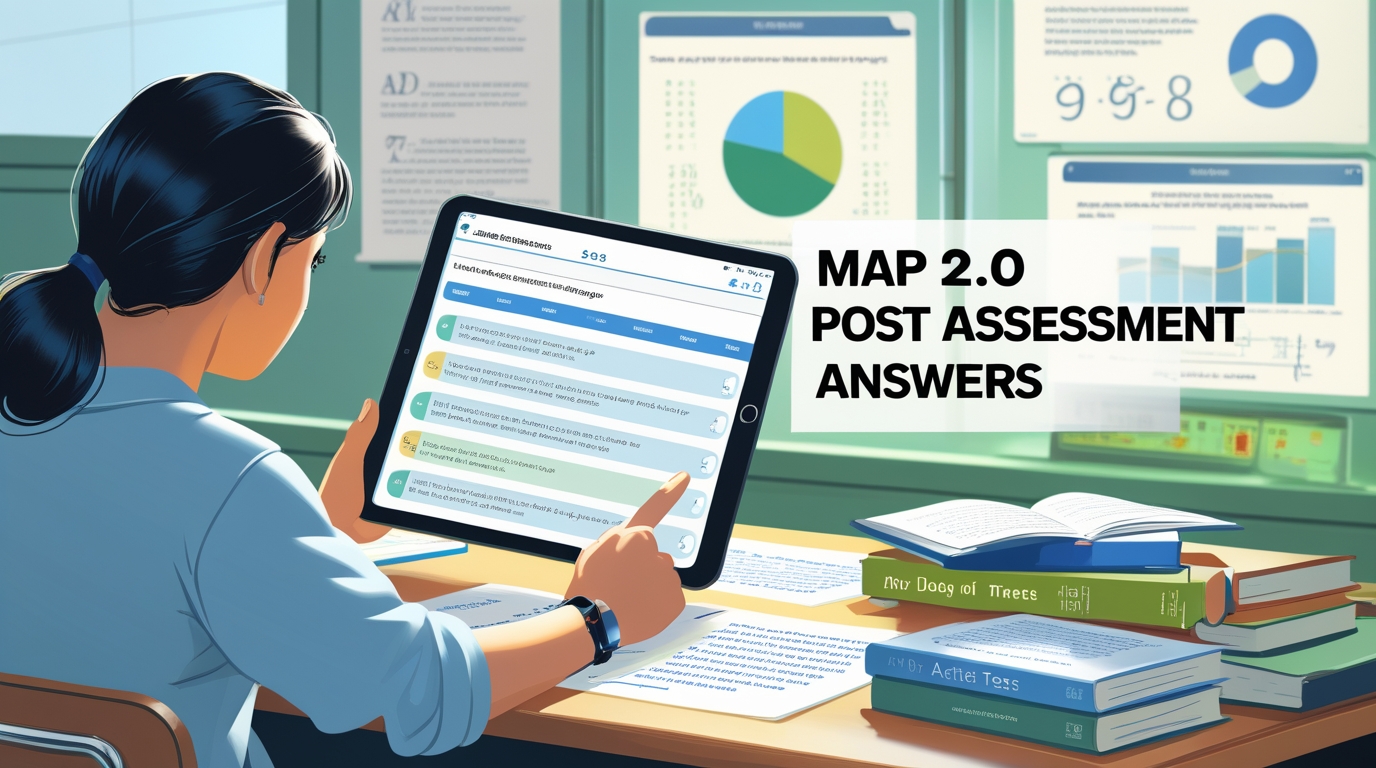
Students sometimes treat MAP testing like an external requirement, separate from school life. In reality, daily classwork is the best preparation tool available. Teachers intentionally align assignments, group activities, and reading passages with skill bands reflected in MAP reports. When a teacher chooses a reading activity on identifying theme, they’re strengthening core MAP competencies. When they introduce multiplication models, they’re reinforcing foundational math skills.
Students who ask clarifying questions during class, review completed homework, and attend tutoring respond better to MAP assessments because they engage with the material throughout the semester. Instead of chasing “answers,” they build the academic fluency that adaptive tests reward.
9. Common Mistakes Students Make During MAP Testing
The most frequent mistake is rushing. Students assume speed equals confidence, but adaptive testing punishes careless guesses more harshly than wrong attempts. The system interprets rapid errors as a misunderstanding of core concepts and lowers difficulty levels too quickly. Slowing down benefits performance, even if that means fewer questions answered.
Another mistake is trying to predict difficulty. Students sometimes panic when the exam suddenly becomes challenging. In adaptive testing, hard questions are not punishment—they are evidence of mastery. Receiving a difficult reading passage or advanced algebra problem often indicates strong skill development. Embrace those moments as a chance to demonstrate growth.
10. What Parents Should Know When Supporting Their Child
Parents play a major role in student confidence. They don’t need to be experts in every content area to help. What students need most is structure: comfortable study space, regular reading habits, and encouragement during academic challenges. Asking open-ended questions like “What part of today’s lesson was most confusing?” opens dialogue without pressure. Exploring concepts together builds trust.
Parents should resist the temptation to seek MAP 2.0 Post Assessment Answers online for their children. Not only is this counterproductive, but it gives students the false idea that success comes from shortcuts. Instead, focus on continuous practice, goal-setting, and tracking progress on the score report. When growth is celebrated, students naturally adopt a healthier academic mindset.
11. Why Long-Term Skill Building Outperforms Test-Specific Studying
MAP assessments are not isolated tests—they are checkpoints in a broader educational journey. The students who consistently improve understand the purpose of learning rather than chasing numbers. A seventh-grader who reads regularly may not see immediate RIT increases, but over time their vocabulary expands, text interpretation sharpens, and confidence matures. The next time they encounter a challenging passage, they decode it instead of panicking.
This long-term growth approach teaches resilience. Communities often celebrate high achievers, but strong growth stories matter just as much. MAP testing teaches students to build knowledge, apply techniques, and develop independent thought. These are the qualities that carry them forward into high school, college, and professional life.
Final Thoughts
Searching for MAP 2.0 Post Assessment Answers misses the point of the assessment. The MAP system was designed to track growth, identify skill gaps, and support individualized learning—not reward memorization. Students should invest energy in skill mastery, asking questions, and applying real academic strategies. With consistent effort and targeted preparation, MAP scores rise naturally and sustainably. The value isn’t in getting the “right answers”—it’s in learning how to think, problem-solve, and approach challenges with confidence.
Frequently Asked Questions (FAQs)
1. Can MAP 2.0 post assessment answers be found online?
No. Because MAP 2.0 is adaptive, every student sees different questions based on their performance. Even if a website claims to have answers, they’re either inaccurate or taken from unrelated practice material. The system changes continuously, so memorizing answers offers no advantage.
2. How can I increase my RIT score effectively?
Improve skills, not shortcuts. Read daily, practice real math problems, review vocabulary, and ask teachers for clarification. RIT scores grow when students understand concepts deeply, not when they cram or guess.
3. Why does my test get harder when I answer correctly?
The MAP algorithm increases difficulty to measure your true instructional level. Harder questions indicate growth. This doesn’t mean you’re doing poorly—it means you’re performing at a higher level and the system is checking your limits.
4. Are MAP scores used for grades or placement?
In many districts, MAP scores are used to guide instruction, evaluate growth, and sometimes determine placement in advanced classes. They are rarely used as a traditional grade. Teachers rely on the RIT score to identify which skills to strengthen.
5. What should I do if I get anxious before MAP testing?
Take normal breaths, pace yourself, and approach the exam like a class assignment. Remind yourself that MAP is not a test of perfection—it measures progress. Review skills you struggle with, rest the night before, and trust what you’ve learned.
FOR MORE : FLIPPAMAGAZINE