
When Star Wars: The Rise of Skywalker teased the image of Rey wielding a double-bladed red lightsaber, fans across the United States and around the world were instantly hooked. Known as Dark Side Rey, this brief but powerful vision sparked intense discussion, theories, and debates within the Star Wars community. Was Rey destined to fall to the dark side? Was this a glimpse of an alternate future, or something deeper tied to her lineage and the Force itself? Far from being a throwaway moment, Dark Side Rey represents one of the most symbolically rich ideas in the sequel trilogy. She embodies temptation, fear, inherited darkness, and the constant struggle between light and shadow that defines the Star Wars saga.
The Origin of Dark Side Rey in Star Wars Canon
Dark Side Rey first appears during a Force vision on Kef Bir, where Rey confronts a dark reflection of herself. This moment is canon and deliberately framed as a warning rather than a prophecy. In Star Wars lore, Force visions often reflect internal conflict instead of literal futures. Rey’s dark counterpart emerges at a moment when she is emotionally vulnerable, questioning her identity and terrified of repeating the mistakes of those before her. This vision is not a random nightmare; it is a manifestation of her fears about power, heritage, and destiny. Within canon, Dark Side Rey exists as a psychological and spiritual trial rather than a physical transformation.
Rey’s Inner Conflict and the Pull of the Dark Side
Unlike previous Jedi protagonists, Rey begins her journey without formal guidance or a clear understanding of the Force. This lack of structure leaves her emotionally exposed. Her anger, loneliness, and fear—emotions the dark side thrives on—often surface throughout the sequel trilogy. Dark Side Rey symbolizes what could happen if those feelings take control. The Star Wars universe has consistently shown that raw power combined with unresolved trauma can lead even the most well-intentioned Force users astray. Rey’s vision forces her to confront the reality that resisting the dark side is an active, ongoing choice.
The Significance of Rey’s Palpatine Lineage
One of the most controversial revelations in modern Star Wars is Rey’s lineage as the granddaughter of Emperor Palpatine. This revelation gives Dark Side Rey deeper meaning. Palpatine represents manipulation, corruption, and absolute power through the dark side of the Force. Rey’s fear of becoming like him fuels her vision. Dark Side Rey is not just about temptation—it is about inherited darkness and the anxiety of identity. Star Wars canon emphasizes that lineage influences but does not define destiny, and Dark Side Rey exists to reinforce that message.
Dark Side Rey’s Lightsaber: Design and Symbolism
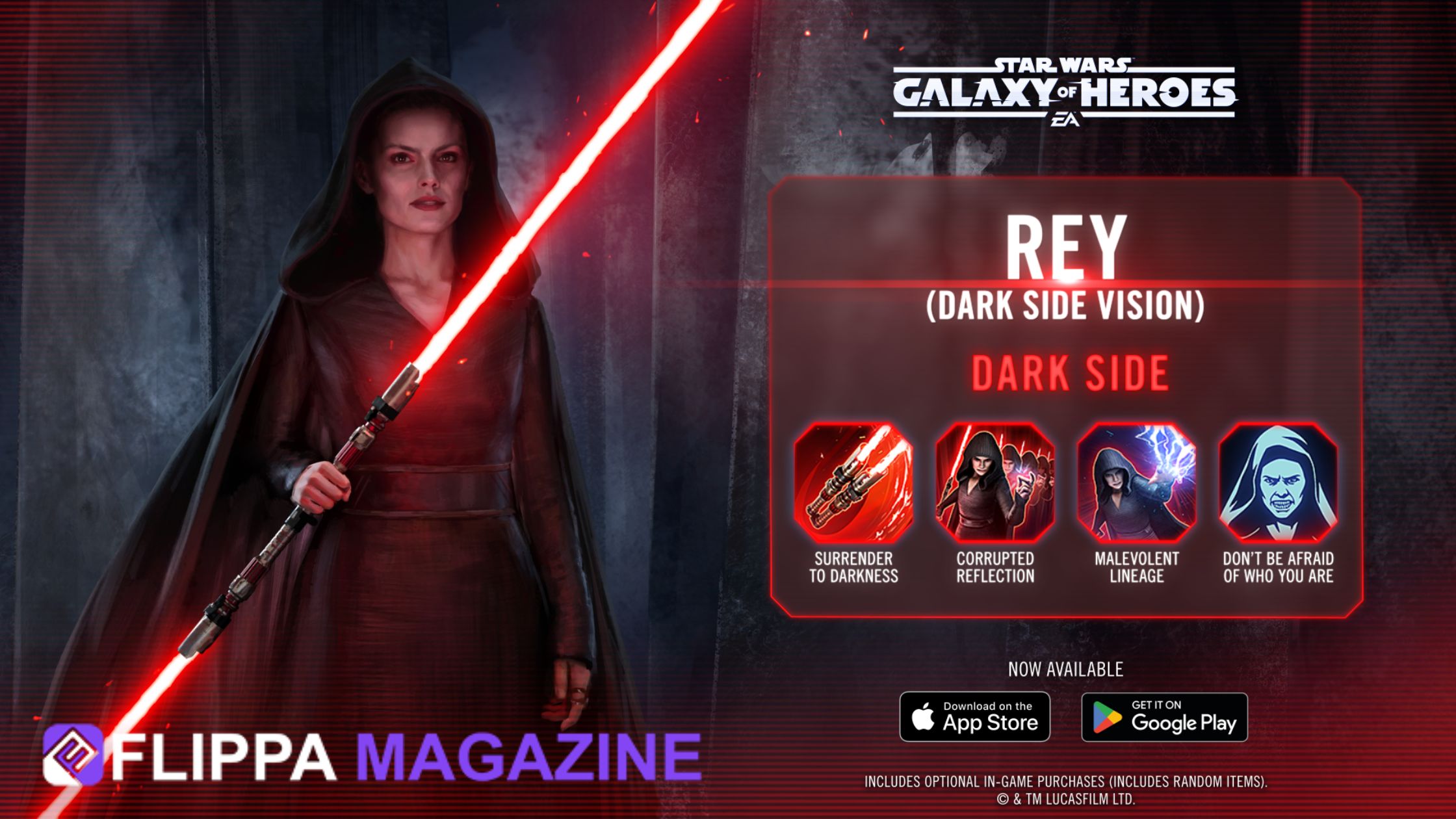
The double-bladed red lightsaber wielded by Dark Side Rey is one of the most visually striking weapons in Star Wars history. Its hinged design, which allows it to fold for concealment, symbolizes deception and adaptability—hallmarks of Sith philosophy. Red lightsabers in canon are created through a process known as “bleeding” kyber crystals, reflecting pain, anger, and domination. By giving Dark Side Rey this weapon, the vision visually communicates what surrendering to the dark side would cost her: control at the expense of compassion.
Force Powers Associated With Dark Side Rey
While Dark Side Rey does not demonstrate new abilities beyond Rey’s existing powers, the implication is clear. The dark side amplifies Force abilities such as telekinesis, Force lightning, and enhanced combat prowess. Rey has already shown hints of these abilities, most notably when she accidentally uses Force lightning. Dark Side Rey represents a future where Rey stops restraining herself. In Star Wars canon, the dark side offers quick, explosive power, but always demands a moral price.
Force Visions and Their Role in Star Wars Storytelling
Force visions have long played a critical role in Star Wars, from Luke’s encounter in the Dagobah cave to Anakin’s prophetic nightmares. Dark Side Rey fits squarely into this tradition. These visions are rarely literal; instead, they reveal emotional truths. Rey’s confrontation with her dark self mirrors Luke’s realization that Darth Vader’s darkness existed within him as well. This storytelling device reinforces a core theme of Star Wars: the greatest battles are fought within.
Dark Side Rey vs. Light Side Rey
The contrast between Dark Side Rey and Light Side Rey highlights the central moral struggle of the sequel trilogy. Light Side Rey is driven by empathy, self-sacrifice, and hope. Dark Side Rey, by contrast, represents fear-driven action and self-preservation at any cost. This duality reflects the balance of the Force itself. Star Wars has always emphasized that the line between Jedi and Sith is thinner than it appears, and Rey’s story makes that lesson especially personal.
Fan Theories and Misconceptions About Dark Side Rey
Many fans initially believed Dark Side Rey signaled an alternate timeline or a temporary fall similar to Anakin Skywalker’s. However, canon material and narrative context make it clear that this was never the case. Dark Side Rey is not an abandoned storyline but a thematic exploration. It serves as a visual shorthand for Rey’s struggle rather than a plot twist. Understanding this distinction is essential to appreciating her character arc and the broader message of the sequel trilogy.
What Dark Side Rey Means for Rey’s Character Development
Dark Side Rey ultimately strengthens Rey’s arc rather than undermining it. By facing her darkest potential and rejecting it, Rey proves that identity is defined by choice, not bloodline. This moment prepares her for the final confrontation with Palpatine, where she fully embraces her chosen family and Jedi ideals. In terms of character development, Dark Side Rey is the emotional low point that makes Rey’s final victory meaningful and earned.
The Broader Star Wars Themes Reflected in Dark Side Rey
At its core, Dark Side Rey reinforces the timeless Star Wars theme that the Force is about balance, responsibility, and moral courage. The dark side is not external evil waiting to strike—it is a constant temptation rooted in fear and desire. Rey’s experience echoes the journeys of Luke, Anakin, and even Ben Solo. Her story reminds audiences that resisting darkness requires self-awareness, humility, and connection to others.
Dark Side Rey and the Fear of Power Without Control

One of the most overlooked aspects of Dark Side Rey is how strongly her image reflects the danger of power without discipline. Rey’s raw connection to the Force is unmatched in the sequel trilogy, but her lack of early training makes that power volatile. The dark side feeds on this imbalance, offering strength without patience or wisdom. Dark Side Rey visually communicates what happens when ability outpaces emotional maturity. This idea resonates deeply in Star Wars canon, where unrestrained Force users often fall not because they are evil, but because they lack grounding and guidance.
The Psychological Meaning Behind Facing a Dark Reflection
Seeing oneself as an enemy is a powerful psychological symbol, and Star Wars uses it deliberately with Dark Side Rey. This moment is not about physical combat but self-recognition. Rey is forced to confront her own capacity for destruction, ambition, and anger. Much like Luke’s vision on Dagobah, the message is clear: the darkness she fears is not external. By surviving this confrontation without denying its existence, Rey takes a critical step toward emotional maturity and Jedi self-awareness.
How Dark Side Rey Reflects Modern Star Wars Storytelling
Dark Side Rey also represents a shift in how modern Star Wars tells its stories. Instead of focusing solely on grand battles between good and evil, the sequel trilogy leans heavily into internal conflict and identity. Rey’s struggle mirrors contemporary storytelling themes familiar to U.S. audiences—self-doubt, inherited trauma, and the fear of becoming something you despise. This approach makes Dark Side Rey feel more personal and relatable than traditional Sith villains, grounding the Force in human emotion.
Dark Side Rey Compared to Anakin Skywalker’s Fall
While Anakin Skywalker’s fall to Darth Vader is gradual and tragic, Dark Side Rey serves as a warning rather than a transformation. Anakin lacked the emotional support and clarity to resist his fears, whereas Rey actively seeks truth and connection. This contrast is intentional within Star Wars canon. Dark Side Rey exists to show that history does not have to repeat itself. Where Anakin surrendered to the dark side, Rey pauses, reflects, and chooses differently, reinforcing the saga’s evolving perspective on redemption and agency.
Why Dark Side Rey Continues to Influence Star Wars Culture
Even years after The Rise of Skywalker, Dark Side Rey remains a dominant presence in Star Wars discussions, fan art, cosplay, and expanded lore conversations. Her brief appearance left a lasting impact because it challenges traditional hero archetypes. She represents the idea that heroism is not about being free of darkness, but about confronting it honestly. This lasting relevance proves that Dark Side Rey is more than a cinematic moment—she is a symbol of the modern Star Wars identity and its commitment to deeper, character-driven storytelling.
Conclusion: Why Dark Side Rey Still Matters
Dark Side Rey remains one of the most memorable images from the sequel trilogy because it speaks to something universal. It is not just about Star Wars lore or canon—it is about confronting who we could become if fear defines our choices. By facing and rejecting her dark reflection, Rey embodies the hopeful heart of Star Wars. Dark Side Rey is not a missed opportunity or a gimmick; it is a powerful narrative tool that reinforces the saga’s enduring message: no matter where you come from, the light is always a choice.
Frequently Asked Questions (FAQs)
1.Is Dark Side Rey canon in Star Wars?
Yes, Dark Side Rey is fully canon. She appears as a Force vision in Star Wars: The Rise of Skywalker, representing Rey’s internal struggle rather than an alternate reality or future timeline.
2.Did Rey actually turn to the dark side?
No, Rey never truly turns to the dark side. Dark Side Rey symbolizes temptation and fear, but Rey ultimately chooses the light and remains a Jedi.
3.Why does Dark Side Rey have a red lightsaber?
The red lightsaber represents Sith corruption and emotional domination. Its presence in the vision highlights what Rey could become if she embraced anger and fear.
4.Is Dark Side Rey connected to Emperor Palpatine?
Yes, symbolically. Dark Side Rey reflects Rey’s fear of inheriting Palpatine’s darkness, reinforcing the theme that lineage influences but does not control destiny.
5.What is the main message behind Dark Side Rey?
The central message is that identity is shaped by choices, not bloodlines. Dark Side Rey exists to show that confronting inner darkness is essential to personal growth and balance in the Force.
FOR MORE : FLIPPAMAGAZINE