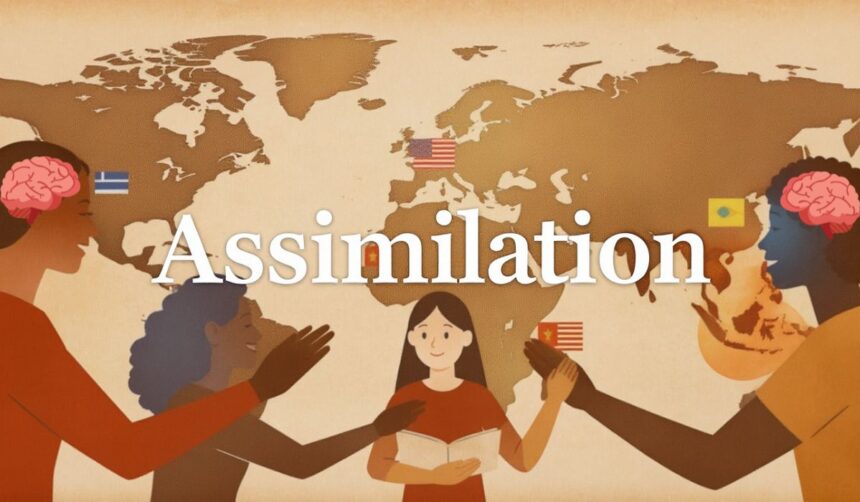
Cultural assimilation is a powerful and ongoing process that shapes how societies grow, connect, and evolve. In a world where migration, globalization, and communication break down borders, cultures no longer exist in isolation. People share food, language, traditions, and ideas, creating a unique blend of identities. In the United States, assimilation has played a defining role in building a multicultural nation. From early European settlers to modern-day immigrants, each wave of people has contributed to the cultural fabric of American life.
This article explores how assimilation happens, why it matters, and how it affects both individuals and societies. You’ll also discover the difference between assimilation and integration, along with examples that show how cultures adapt to one another while still preserving their unique essence.
What Is Cultural Assimilation?
Cultural assimilation occurs when individuals or groups from one culture adopt the customs, behaviors, and values of another, often dominant, culture. It’s more than simply learning a language or trying a new cuisine — it involves a deep transformation of social habits, traditions, and identity. Assimilation can happen naturally over generations or as a result of social, political, or economic pressures.
In the U.S., cultural assimilation is often seen in the “melting pot” concept, where different cultural groups blend into a single national identity. Yet, in today’s diverse society, many prefer to view America as a “salad bowl” — where people retain distinct cultural traits while sharing common values and goals.
The Historical Roots of Assimilation in America

Assimilation has deep roots in American history. During the late 19th and early 20th centuries, millions of immigrants arrived from Europe, Asia, and Latin America. To thrive in their new home, they learned English, adopted American customs, and sometimes changed their names to fit in more easily. Schools, workplaces, and media played major roles in promoting this process.
However, assimilation wasn’t always voluntary or positive. Native American communities, for example, were often forced into assimilation through boarding schools and government policies that aimed to erase indigenous languages and traditions. Over time, awareness of these injustices led to a broader understanding of cultural preservation and respect for diversity.
How Assimilation Happens: The Key Stages
Assimilation typically unfolds in stages. Sociologists often identify four major dimensions:
-
Cultural assimilation – Adopting the language, dress, and customs of the dominant culture.
-
Structural assimilation – Gaining access to mainstream social institutions like education, employment, and housing.
-
Marital assimilation – Intermarriage between cultural groups, leading to social and familial integration.
-
Identificational assimilation – When individuals begin to identify themselves as part of the dominant culture.
These stages don’t always occur in order or at the same pace. Some groups may achieve economic success quickly while retaining strong cultural ties, while others may integrate socially first before fully adopting new customs.
Cultural Assimilation vs. Integration
Although assimilation and integration are often used interchangeably, they describe different processes. Assimilation implies that minority groups gradually absorb into the dominant culture, potentially losing some of their original identity. Integration, on the other hand, emphasizes inclusion without complete cultural loss — a balance where individuals can participate fully in society while maintaining their heritage.
In modern America, integration is often seen as a healthier goal than complete assimilation. It allows people to feel accepted without abandoning their roots, creating a society that values both unity and diversity.
Examples of Cultural Assimilation in Everyday Life
Cultural assimilation is visible all around us. Consider food culture — pizza, sushi, tacos, and curry are now staples in American cuisine, even though they originated elsewhere. Over time, these foods evolved to match local tastes, symbolizing how cultures adapt and merge.
Language is another major example. Immigrant families often start by speaking their native language at home, while children grow up bilingual or primarily English-speaking. Music, fashion, and media also reflect this blending — artists of different backgrounds mix styles, genres, and influences to create something entirely new.
Even holidays demonstrate assimilation. Many Americans, regardless of background, celebrate cultural festivals like Cinco de Mayo or Lunar New Year, reflecting how traditions can become part of a shared national experience.
The Role of Education in Cultural Assimilation
Schools are central to the assimilation process. They teach common values, language skills, and civic knowledge that help students participate fully in society. For immigrant children, education is often the first major step toward assimilation. Learning English, understanding American history, and interacting with peers from diverse backgrounds encourage both adaptation and inclusion.
However, there’s a growing movement toward bilingual and multicultural education, which supports integration rather than forced assimilation. This approach acknowledges that preserving one’s cultural heritage strengthens identity and enriches the broader community.
Economic and Social Factors in Assimilation
Economic opportunities often drive assimilation. When people enter the workforce, they adapt to new norms, communication styles, and expectations. Over time, professional environments promote shared cultural values, such as punctuality, teamwork, and individual achievement.
Social mobility also plays a role. As immigrants and minority groups gain access to education, housing, and political representation, they become part of mainstream society. However, socioeconomic inequality can slow or prevent assimilation, leading to segregation and cultural isolation.
The Psychological Side of Assimilation
Assimilation isn’t only a social or economic process — it’s deeply personal. Many individuals experience what psychologists call “acculturative stress,” a tension between preserving one’s heritage and adapting to a new culture. This struggle can affect identity, belonging, and mental health.
Second-generation immigrants often feel this most strongly. They may grow up balancing two worlds — maintaining family traditions at home while embracing the dominant culture at school or work. Over time, many find strength in this dual identity, seeing it as a bridge between communities rather than a source of conflict.
Challenges and Criticisms of Assimilation
While assimilation can promote unity, it also raises concerns about cultural erasure. Critics argue that when minority groups are pressured to conform, they lose valuable traditions, languages, and perspectives. Forced assimilation has historically led to marginalization and loss of heritage for many communities, including Native Americans, African Americans, and Asian immigrants.
Modern discussions around assimilation now focus on mutual adaptation — a two-way process where both minority and dominant cultures influence each other. This dynamic approach supports diversity while still building common ground.
Globalization and Modern Cultural Exchange
Globalization has transformed assimilation from a local process into a global one. Today, technology, travel, and media allow cultures to mix faster than ever before. American pop culture spreads worldwide, while global influences reshape life in the U.S. — from international cuisine to fashion trends and digital communication styles.
This new form of assimilation is less about dominance and more about exchange. People can now adopt new cultural elements without losing their roots, creating hybrid identities that reflect our interconnected world.
Final Thoughts
Cultural assimilation remains one of the most influential forces shaping modern societies. It reflects the human ability to adapt, connect, and evolve. While assimilation can promote unity, it must also respect diversity and individual identity. The ideal is not a world where everyone becomes the same, but one where cultures learn from each other and grow together.
In the United States, the story of assimilation continues to unfold — in classrooms, neighborhoods, workplaces, and communities. Each generation redefines what it means to belong, proving that cultural adaptation is not just about survival, but about creating a shared future rooted in respect, understanding, and inclusion.
Frequently Asked Questions (FAQs)
1. What is the main purpose of cultural assimilation?
The purpose of cultural assimilation is to help individuals or groups adapt to a new culture so they can participate fully in society. It allows people to communicate effectively, access opportunities, and build social connections, while contributing to a shared cultural identity.
2. How does cultural assimilation differ from cultural integration?
Assimilation involves adopting the customs and values of another culture, often at the expense of one’s original identity. Integration, however, encourages participation in society while maintaining one’s heritage. Integration is now seen as a more inclusive and balanced approach.
3. Can assimilation be both positive and negative?
Yes. Assimilation can promote unity and mutual understanding, but when forced, it can lead to the loss of language, traditions, and identity. Voluntary assimilation, based on mutual respect, tends to produce more positive outcomes.
4. What are common examples of assimilation in American culture?
Common examples include the widespread popularity of international foods, bilingual education programs, intermarriage between cultural groups, and the blending of music and art styles from different traditions. These show how cultures naturally adapt to one another.
5. How does globalization affect cultural assimilation today?
Globalization accelerates assimilation by increasing cultural exchange through media, travel, and the internet. People are more exposed to different traditions and lifestyles, which encourages adaptation — but also creates opportunities for preserving cultural diversity in a global context.
FOR MORE : FLIPPAMAGAZINE