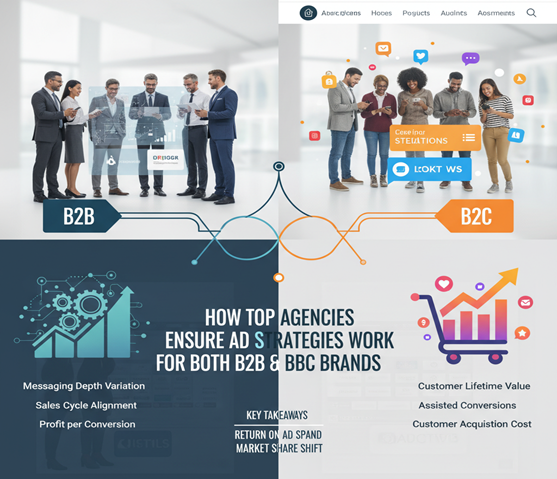
Ever wondered how some marketing wizards manage to craft ad campaigns that resonate with a diverse crowd, from a procurement manager to a teenager eyeing the latest gadget? It’s not magic, but it certainly feels like it sometimes. The truth is, while the digital landscape might offer the same channels – think social media, search engines, video platforms – the approach for B2B (business-to-business) and B2C (business-to-consumer) brands couldn’t be more different.
A truly effective agency understands this fundamental divergence, adapting their strategy to speak directly to the unique motivations and needs of each audience. It’s less about picking a side and more about knowing which hat to wear for which conversation. The core challenge for agencies lies in navigating these distinct worlds with precision, ensuring every dollar spent works hard, whether it’s convincing a CEO or charming a consumer. They don’t just throw darts at a board; they meticulously tailor their efforts, starting with the very heart of communication: the message itself.
Messaging depth variation
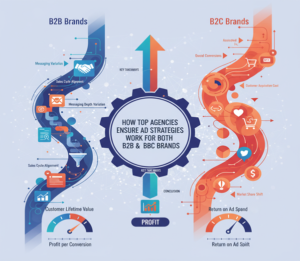
When you’re talking to a business, you’re often speaking to a committee, a budget, and a long-term strategic plan. This means B2B messaging tends to be a deep dive into problem-solving, ROI, efficiency gains, and competitive advantage. It’s rational, data-driven, and often quite detailed, focusing on how a product or service integrates into existing operations and delivers tangible value. Ads here might feature whitepapers, case studies, or webinars, aiming to educate and inform a sophisticated buyer.
On the flip side, B2C messaging is typically a sprint towards emotion, aspiration, and immediate gratification. It’s about lifestyle, desire, convenience, and how a product makes someone feel. Think vibrant visuals, catchy slogans, and stories that tap into personal experiences or social trends. A good ad for a B2C brand isn’t just selling a product; it’s selling a feeling, a solution to a daily annoyance, or a step towards a desired identity. Agencies excel at this nuanced storytelling.
They understand that even within the same ad format, like video, the narrative must shift dramatically. A top ad agency, for instance, might create a compelling explainer video for a B2B SaaS product, highlighting features and benefits, while simultaneously producing a short, emotionally resonant clip for a B2C fashion brand, showcasing style and confidence. The medium is similar, but the story’s depth and emotional hook are worlds apart. As insights from the Meta Business Blog often suggest, understanding audience intent is paramount for crafting effective ad copy, whether it’s for a quick purchase or a considered investment.
Sales cycle alignment
Perhaps one of the most significant differentiators between B2B and B2C advertising is the sales cycle. For B2B, it’s typically a marathon, not a sprint. Deals can take weeks, months, or even years to close, involving multiple stakeholders, extensive research, and complex negotiation.
In the B2B world, ads aren’t just about immediate conversion—they’re about nurturing leads, building trust, establishing authority, and guiding potential clients through a multi-stage funnel. Campaigns often focus on lead generation, thought leadership content, and relationship-building over time.
Common CTAs include downloading an e-book, requesting a demo, or signing up for a webinar. The goal is always to move prospects further down the pipeline, offering value at every touchpoint. As highlighted in many HubSpot B2B sales trend reports, educational content is crucial for supporting buyers throughout their journey.
B2C advertising, on the other hand, usually operates on a much shorter and more impulsive sales cycle. A consumer might see an ad and make a purchase within minutes—particularly for low-priced or emotionally driven products.
Here, ads are designed for quick recognition, instant desire, and effortless conversion. CTAs tend to be more direct: Shop Now, Add to Cart, Learn More. Brand appeal and instant gratification sit at the core of these campaigns.
How Top Agencies Approach These Differences
Leading agencies are experts at mapping these two sales rhythms to their strategies:
For B2B
- LinkedIn ads for top-of-funnel awareness
- Retargeting with case studies or whitepapers
- Personalized email nurturing sequences
- Demo offers and high-value content at decision-stage
For B2C
- Eye-catching Instagram or TikTok ads
- Immediate retargeting for abandoned carts
- Flash sales, urgency-based offers, loyalty campaigns
Understanding these distinct cycles allows agencies to deploy the right resources at the right time—guiding prospects efficiently from interest to conversion, regardless of complexity.
The Real Magic: Strategic Adaptation
What truly sets leading agencies apart is their adaptability.
They don’t just run ads—they orchestrate conversations.
- A business buyer needs reassurance, data, and long-term value.
- A consumer seeks connection, convenience, and instant clarity.
Segment-based adaptation ensures that every piece of content, every ad placement, and every CTA is perfectly aligned with the audience it’s meant for. This strategic flexibility is what enables agencies to deliver consistent, scalable results across today’s diverse commercial landscape.
Key Takeaways
- Effective ad agencies understand that B2B and B2C strategies require fundamentally different approaches, even when using the same channels.
- B2B messaging focuses on rational, problem-solving, and ROI-driven narratives, while B2C messaging taps into emotion, aspiration, and immediate gratification.
- Sales cycles for B2B are typically long and complex, requiring nurturing and education, whereas B2C cycles are often short and impulsive, aiming for quick conversions.
- Agencies meticulously adapt content depth, ad formats, and call-to-actions to align with the unique motivations and buying journeys of each audience segment.
- Strategic adaptation, rather than a one-size-fits-all approach, is the hallmark of agencies that successfully serve both B2B and B2C brands.
Conclusion
Navigating the intricate world of B2B and B2C advertising demands more than just a passing understanding of digital tools; it requires a deep empathy for distinct audience motivations and buying behaviors. The most effective agencies don’t just create ads; they craft tailored experiences, ensuring every campaign speaks directly to the heart or the spreadsheet, depending on who’s listening. By mastering the art of segment-based adaptation, they unlock potential for brands across the spectrum, proving that with the right strategic partner, success isn’t just possible – it’s practically guaranteed. When you’re ready to make your advertising work smarter, remember that finding the right partner among the top ad agencies can make all the difference.