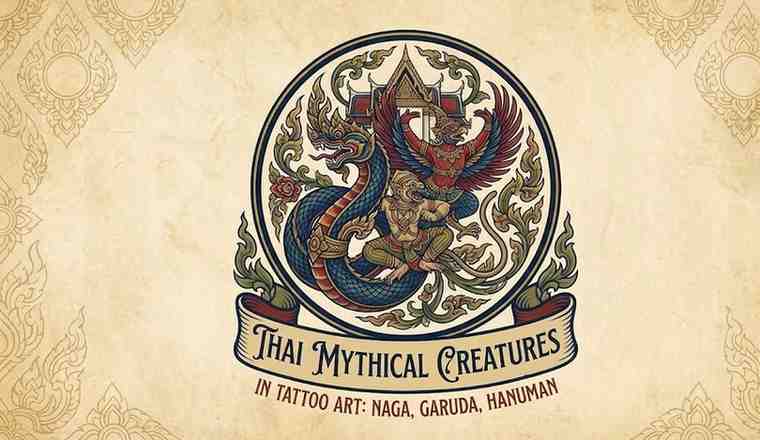
Thai tattoo culture is deeply rooted in spirituality, symbolism, and centuries-old mythology, making it one of the most meaningful forms of body art in Southeast Asia. For many travelers seeking body tattoos Thailand, mythical creatures like Naga, Garuda, and Hanuman carry powerful stories that shape the design and intention of each piece. Whether a person visits a traditional Sak Yant master or a modern tattoo studio in Bangkok, these symbols represent courage, wisdom, divine protection, and spiritual transformation. Understanding their cultural significance allows both locals and visitors to appreciate tattooing in Thailand as more than aesthetics. It is a form of storytelling that honors history, belief, and identity.
Naga: The guardian serpent of protection and rebirth
The Naga is one of the most recognized figures in Thai mythology. This serpent-like being is believed to protect temples, rivers, and sacred lands across Thailand. In tattoo art, the Naga represents protection from physical and spiritual harm. Many individuals choose Naga tattoos when they seek strength during personal challenges or when they wish to honor experiences that required resilience.
A Naga tattoo also symbolizes transformation. Its association with water and rebirth makes it meaningful for people who want their body tattoos Thailand to reflect personal growth or a new chapter in life. In both traditional Sak Yant work and contemporary designs, the Naga’s flowing, scaled form allows artists to create visually striking pieces across the back, arm, or side.
Garuda: The symbol of power, freedom, and divine authority
Garuda, the half-human and half-bird deity, is a national symbol of Thailand. It is often connected to royalty and divine justice. In tattoo culture, Garuda is chosen by individuals who value leadership, strength, and independence. The creature’s large wings and fierce expression make it ideal for bold placements such as the chest or upper back.
A tattoo of Garuda is also believed to protect the wearer from negativity. Many clients visiting a modern tattoo studio in Bangkok request Garuda designs to represent personal power and the ability to rise above hardship. The symbolism aligns with Thailand’s cultural teachings about integrity, courage, and spiritual discipline.
Hanuman: The fearless warrior and loyal protector
Hanuman, the monkey god from the Ramakien (the Thai version of the Ramayana), is admired for his loyalty, bravery, and unwavering determination. In Thai tattoo tradition, Hanuman symbolizes fearlessness and confidence in the face of challenges.
People choose Hanuman tattoos when they want a design that reflects courage, devotion to personal values, and inner strength. Traditional Sak Yant depictions often show Hanuman in dynamic movement, representing action, energy, and resilience. These qualities make Hanuman one of the most meaningful choices for body tattoos Thailand, especially among those who value discipline and moral courage.
Why mythical creature tattoos remain deeply meaningful
Thai mythical creatures continue to inspire tattoo lovers worldwide because they combine cultural heritage with personal symbolism. Whether chosen for spiritual protection, emotional transformation, or artistic appreciation, these designs honor stories that have shaped Thai identity for centuries. When created by skilled artists in a reputable tattoo studio in Bangkok, they allow the wearer to carry a piece of Thailand’s cultural and spiritual legacy on their skin.
If you are exploring meaningful body art, understanding the stories behind Naga, Garuda, and Hanuman will help you choose a design that aligns with your beliefs, journey, and personal expression.